Chemical composition and effective compounds of dates and their use in a snack to give energy to athletes
DOI:
https://doi.org/10.31989/ffhd.v13i8.1147Abstract
Background: Dates are recognized as a rich source of nutrients, so they are considered a complementary food element positioning them as functional food for athletes. Energy balls are nutritious snack foods that people, individuals and athletes enjoy. They are a source of natural sugars, fibers and proteins that are nutritionally balanced. Food supplements consist of protein, fats, vitamins, minerals and carbohydrates.
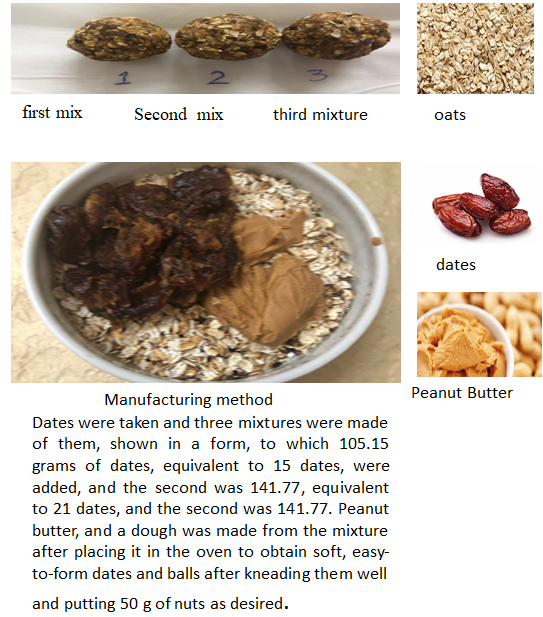
Objective:Enrichment some food products, especially energy-rich balls for athletes that made from dates as a main component for it.
Materials and Methods: Date fruits from five cultivars (Dekel Nour, Barhi, zahdi, khlas, sukari) were collected from the orchards of Baghdad Governorate. The fruits were cleaned and dried in an oven at a temperature of 45 ° C until dryn, then the fruits were ground by means of a grinder. The ground forms were kept in sealed glass containers at a laboratory temperature of 20-25 °C until use.
Results: Variability in contents was observed across the different cultivars, with the highest percentage of total sugars, amounting to 86.70%, being recorded in Barhi dates. Conversely, the lowest sugar percentage was found in date meat, measuring at 69.20%. The fruits recorded the highest moisture percentage with a value of 30.01%. The mineral composition showed that P was the predominant mineral, followed in descending order by Mg, Ca, and proteins. The protein content ranged from 2.14 to 3.20%, while crude fat ranged from (0.15 - 0.44) %. Moisture content in date varieties with early ripening time was between low and high values of 10% to 30%. The comprehensive nutritional profile encompassed minerals and numerous vitamins, most notably B vitamins. Carbohydrates constitute 70% of the date’s composition, including fructose and glucose. Additionally, dates are rich in calcium, magnesium, selenium, copper, phosphorous, potassium, zinc, sulfur, cobalt, fluorine, and manganese. Lately, interest in dates has increased because of their health importance, catalyzing the development of food products.
Keywords: Dates, active substances, chemical compounds, functional foods, oat, nuts
Downloads
Published
Issue
Section
License
Authors retain the copyright of their articles and grant the Functional Food Center (FFC) and its journals the right of first publication under the terms of the Creative Commons Attribution 4.0 International License.
This license permits unrestricted use, distribution, and reproduction in any medium, including commercial use, provided the original author(s) and source are properly credited. Authors may post and share their published work freely, provided that the original publication in this journal is acknowledged.
By submitting to this journal, authors confirm that their manuscripts are original, not under consideration elsewhere, and that they hold the necessary rights to grant this license. The Functional Food Center encourages open scientific exchange and allows derivative and extended works, provided attribution to the original publication is maintained.